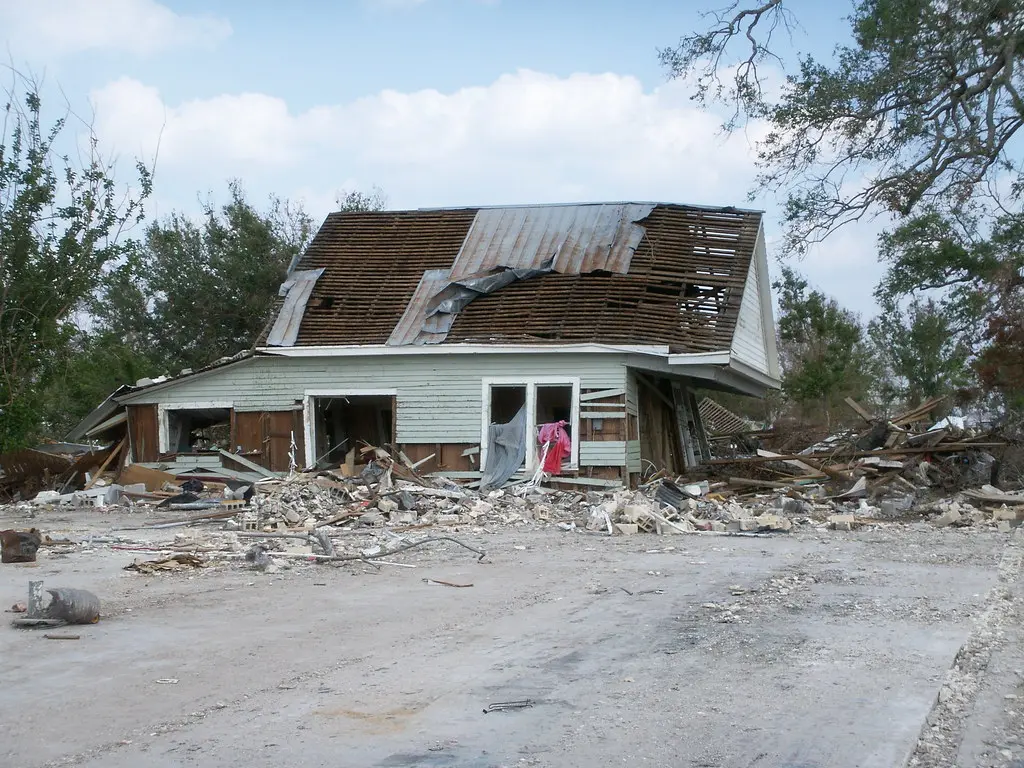
Wind damage is easy to undercount
Hail leaves marks. Wind often doesn’t. A shingle can be lifted, its seal strip broken and its tab creased, then lie back down looking almost normal. Carriers sometimes photograph the roof from a ladder, see nothing missing and write only for the tabs that blew off. Weeks later, the unsealed shingles start leaking.
What we document after a wind event
- Creased and unsealed shingles identified by hand-lift testing across each slope, mapped by direction of the wind.
- Siding, soffit and fascia displacement — vinyl and fiber-cement panels that unlock or crack, aluminum soffit that bows.
- Structural movement — racked porch posts, shifted trusses, separated gable ends and cracked drywall that follows.
- Window and door damage, including broken seals and frame distortion.
- Detached structures — privacy fences, barns, carports, screen enclosures and playground equipment.
- Debris removal amounts, which have their own sub-limits and are frequently shorted.
Tornado claims and total-loss thresholds
In a direct tornado path, the dispute sometimes becomes whether the structure should be repaired or rebuilt. That decision has large cost implications — foundations, utilities, code upgrades, demolition. We price both scenarios so the panel can see the real difference, and we flag when policy limits and ordinance coverage come into play.
Frequently asked questions
Do I need a weather report?
It helps. We pull storm data for your address and date of loss so the panel sees wind speeds and storm reports near the property, not just a general headline.
The carrier paid for missing shingles only. Is that common?
Very. Whether the rest of the roof is damaged usually comes down to lift testing and documentation. That is the kind of scope dispute appraisal handles.
Are fallen trees part of a wind claim?
If a tree damages a covered structure, removal of the tree from that structure and the repairs are typically covered. Trees that fall in the yard without hitting anything are often limited or excluded.