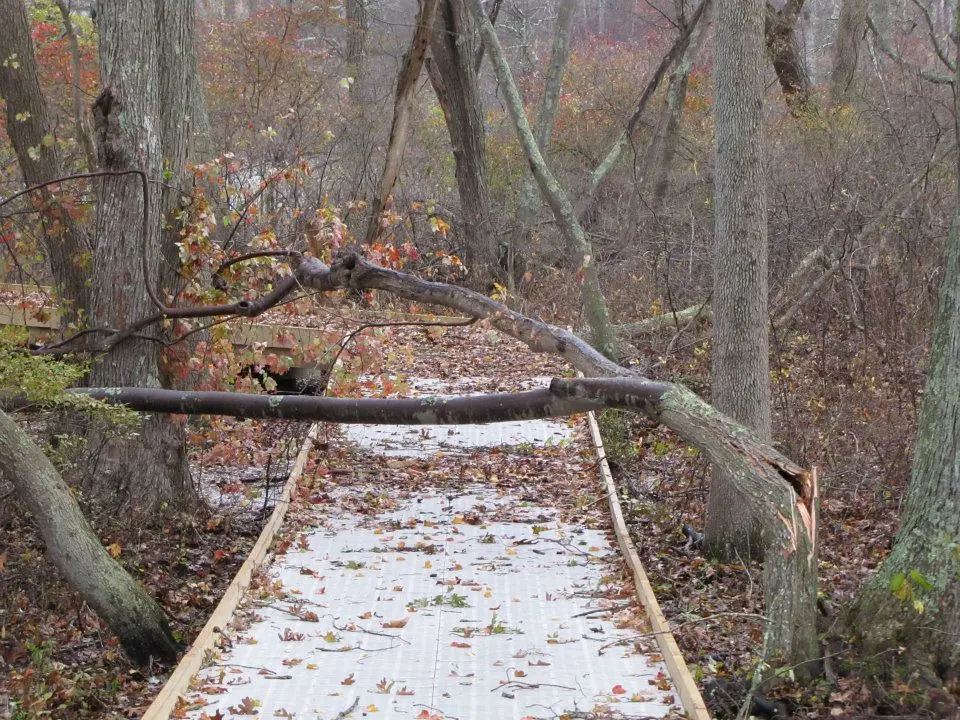
Why tree claims get underpaid
A tree on a house triggers a chain of costs: emergency crane removal, tarping, structural engineering, framing repairs, roofing, interior water damage from rain that followed, and debris hauling. Carriers often pay the tree service invoice and write a modest roof repair, then apply sub-limits to everything else. Many of those amounts are negotiable — or appraisable — once the full scope is documented.
What we document
- Structural damage to rafters, trusses, ridge boards, ceiling joists and wall framing, sometimes with an engineer’s letter.
- Roof system replacement beyond the impact zone when decking or matching makes a patch impractical.
- Secondary interior damage — drywall, insulation, flooring and contents soaked by rain before the roof was dried in.
- Removal and debris — crane time, rigging, stump treatment where it affects the structure, and the policy’s debris removal provisions.
- Other structures — fences, decks, screened porches, carports and detached garages under Coverage B.
Neighbor’s tree, your roof
In most cases, your own policy pays for damage to your property even if the tree came from next door. Whether you can later recover from the neighbor depends on negligence — for example, a tree that was visibly dead. That’s a legal question for an attorney; the valuation of your loss is the part we handle.
Frequently asked questions
Is the cost to remove the tree covered?
Removal from a covered structure is typically covered, often subject to a per-tree or per-occurrence sub-limit. Removal of trees that fell without hitting anything is often limited or excluded.
The estimate only replaces the roof area under the tree. Is that right?
Not necessarily. If decking, framing alignment or shingle matching make a localized repair impractical, a broader replacement may be warranted. That is a scope question appraisal can resolve.
Do I need an engineer?
For significant framing damage, an engineer’s report strengthens the claim and may be required by the permitting office. It is usually reimbursable as part of the loss.